
Five Baby Chickadees!

The Black-capped Chickadee is a common and widespread resident who visits our bird feeders. Then you find yourself very excited since one of these cute chickadees is using a nest boxes of yours. Young naturalist C had this happened and was so excited to tell me about her new resident. BTW: This is the chickadee nest that I posted as Cute Wordless Wednesday and thought she did such a wonderful job documenting their birth that she deserved another posting!


First Day of Banding
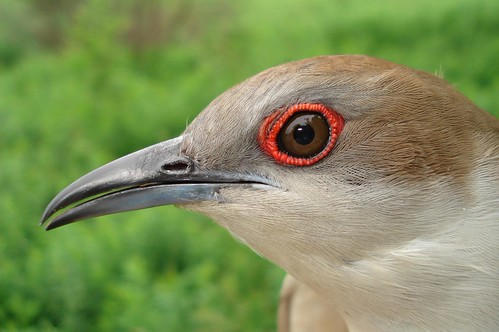
Sunday started our 7th season of banding over at the CLDC – MAPS (Monitoring Avian Productivity and Survivorship) banding station. We were concerned over the weather remnants of “Barry” who got close enough that we almost had to close the station down early (due to the rain/thunder). Although we were lucky given that the thunderstorm passed just to the east of us and we received only a few rain drops. Temperatures ranged from 59F to 78F and everyone commented on how humid it was. It was cloudy for most of the morning and I think it was almost 11:00am once the sun finally start to peak through. (more…)
Black-throated Blue Warbler Nest Building
While out on our big 110 bird day we came across this female Black-throated Blue Warbler doing some nest building. I knew we would be coming back to this same location; so I set up my digital camera. I took the video in lower quality so that I could get about 22 minutes of the female doing continuous nest building. I edited the clip down to the best minute with her completely focused on making the nest perfect.
Photos from my Big Day Last Thursday!

I finally had the opportunity to edit a few of my birding photos from my 110 species bird-a-thon that I participated in last Thursday. I located 19 first for 2007’s (CHECK) and many of which I thought might have been too late in the spring to find. My total count for 2007 is up to 179 species for the year and it is still possible to get many more species throughout the summer. Mike, you will have a hard time trying to catch up with me!! Although this is the point where I really need to start working hard for any specific species that I need to find. So finding these 19 first for the year had really made me happy! They include the: (more…)
Team T-BIRD has the best day ever!!
Temperature ranged from 45.0 – 61.5 degree’s F and the weather would quickly change from cloudy, to sunny, and rain would go from drizzle to downpour. This was one of the worse days for take pictures and I was only able captured a few decent photos. You might ask “so, why was this the best day ever??”
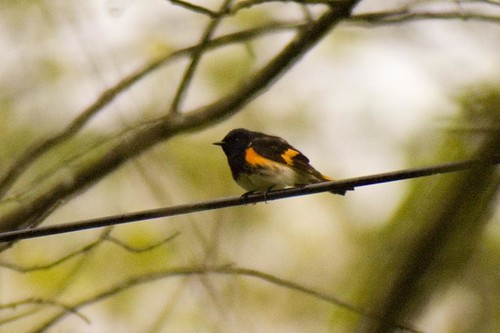
Team T-BIRD (Tim Baird and myself) helped celebrate Jamestown Audubon Society’s 50th anniversary by participating in their Bird-A-Thon. This is our teams first year in chasing the birdies and we decided to visit the Allegany State Park/Allegheny River area. We located 26 species of warblers (not including the Brewster’s Warbler we located), 5 species of vireos and 6 species of thrush. Ok, I will stop teasing you . . . . (more…)
Presque Isle State Park Fieldtrip

Last Saturday (12 May 2007) on International Migratory Bird Day the Cattaraugus County Bird Club attended our annual trip to Presque Isle State Park in Erie Pennsylvania. Although the temperatures were very chilly, we had a wonderful day with 72 species of birds!! We found 13 species of warblers and I was able to add 11 species as first for 2007’s!! (more…)
BBRR

This is the second part to our last Monday (May 6th, 2007) trip to Braddock Bay in Rochester, New York. After visiting the passerine banding station over at the Braddock Bay Bird Observatory (BBBO), we decided to make a detour over to the hawk blind run by the Braddock Bay Raptor Research (BBRR) organization. We always laugh because the walk down the trail to the blind is sooo much longer than our walk back!!


Once we arrived we were greeted by the wonderful volunteers running the blind. (more…)
BBBO

Indigo Bunting
Last Monday (May 6 th 2007) my field assistant and myself visited Braddock Bay Bird Observatory (BBBO) for a spontaneous fieldtrip. We always try to “guess” when the best day is going to be and we are always a day early or a day late of BBBO’s “BIG DAY”!! This year we were a day early but still had a wonderful trip and saw many great birds!


Robin Chicks Hatched!!

The American Robin (Turdus migratorius) builds their nest in shrubs, trees forks or any sufficient ledge that they find. The nest is built with grasses, string and then stuck together by mud. They will line the nest with very fine grasses. Adults will not start incubating the nest until all the eggs have been laid (normally 3 or 4 eggs). They will sit on the eggs for about 12-14 days and nestlings will leave the nest in about 14-16 days. Weather pending the American Robin have anywhere from 2 to 3 broods throughout the year. This video clips below is very long (look out dial-up people) but shows the numerous efforts by both the male and females Robins while raising their young. (more…)
Tonight’s Radar Ornithology Forecast
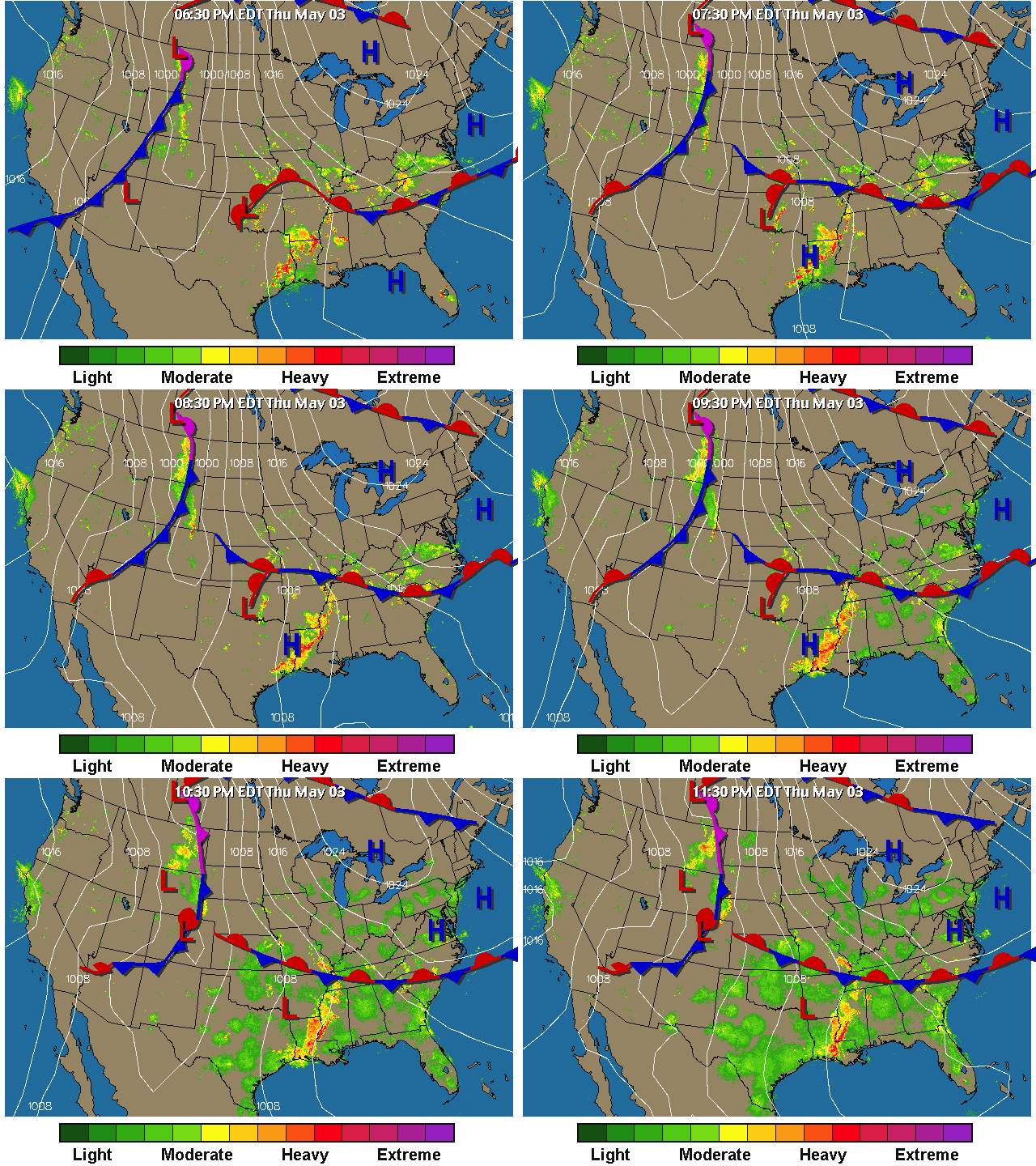
click on the maps to see them enlarge or see the animation.
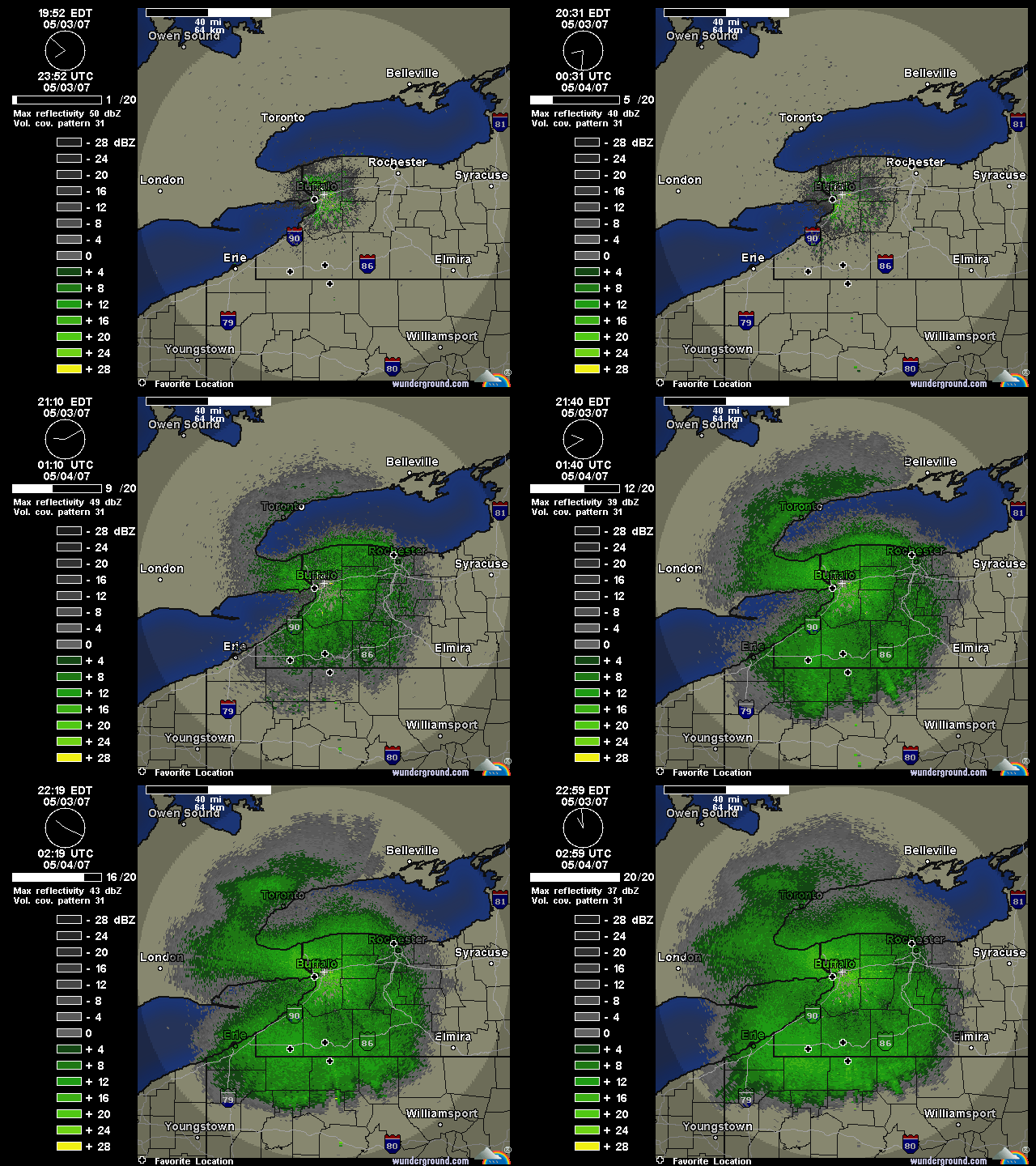
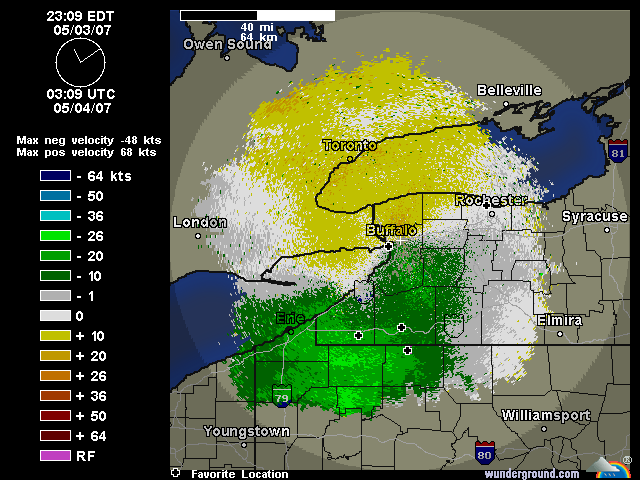
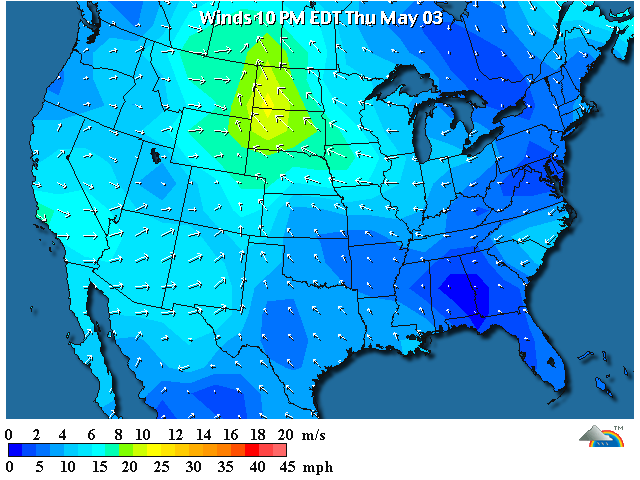
I was reviewing the Weather Underground website to see what this weekend’s weather was looking like. I then noticed that the NEXRAD images for Western New York showed a large movement of birds moving through the area. Watch the font map (below-right) at the point at 9:30 when bazillion of birds suddenly appear on the map (green)! Now that you know Tom’s Forcast, wake up early (before going to work) and spend some time Birding! If you are not sure how to read these maps, please visit my post “how to observe migration at night” and I hope that this post will answer any question you might have regarding Radar Ornithology.
Bluebird Soaps
I ate my breakfast outside this morning and watched some of the Eastern Bluebird soaps!! That poor female continued to put up with this males bluebirds crap! How does she ever get anything done!! This continued to happen all day long!! To understand what I am talking about; click the video below! (more…)
the ultimate birdQUIZ
Being a licensed bird bander requires you to not only know your birds but ultimately collected the data in the most scientific way possible. That includes being 100% sure about the species that you are banding or you are required to release the bird without a band on it. This is something as a bander that you would rarely want happening!! A fellow Bird Bander (and Western New Yorker) David Junkin captured this very unique bird that he couldn’t identify. He was stumped after reviewing the many field guides and other resources available to him. He took many measurements, photographs (every angle) and then released the unbanded bird without knowing if he would capture it again.

Ecological Niches
 Many of our diurnal and nocturnal animals will both have similar ecological niches. Think of a niche as a job someone (human) might have in the grocery store. Many employees that work in this grocery store have a specific duty and specialties in getting their job done. One employee might be the butcher and makes sure the meat isn’t spoiled or is always sliced the same way. Another employee will have the duty of keeping the fruit fresh and knows everything that needs to be known about the fruit they are selling. Some grocery stores have seafood departments, bakeries and even a pharmacy. By everyone working together will provide a location for us making choices in what we eat. Animals also have jobs and their “ecological niche” which keeps them from competing for food but still allows many species to live together in the same habitat. For example, nuthatches walk upside down on the tree to pull out insects that they can see under the bark (which other birds easily overlook). Walking upside down is their ecological niche! (more…)
BOS Count

Today I participated in the Buffalo Ornithological Society (BOS) Count were I cover the lower half of section 24 (Allegany State Park – go figure). The BOS conducts three annual bird counts during the months of April, May, and October. The count dates are targeted to periods of significant bird migration and have been ongoing since 1935. Normally I locate around 50 species during the April count but rarely have to deal with a nor easter storm that just arrived. We woke up to snow on the ground and quickly the weather turned into mixed rain/snow. By noon it was entirely rain coming down and it wasn’t an easy day to be out birding. I worked hard and only able to come up with 40 species (see list below). Adding birds that I did see yesterday (and not today) I could have easily been over 50 but blame the low numbers due to this storm. Typically the April BOS count gives me an opportunity to locate Blue-headed Vireo, Barn Swallow, Louisiana Waterthrush, Broadwing Hawk, and 3-4 species of Butterflies (not this year). I did have some species of waterfowl that normally have moved through the area already. (more…)
Purple Finch Visits the Feeder

When the weather gets bad, the birds require doing just about anything to make sure they have built up enough fat to survive the cold nights. As in yesterdays post, I discussed how many species were heading straight for the roads with hopes of finding worms, bugs or seeds. I have also been talking about the Tree Swallows skimming the lakes in search of flying insects. In my previous posts, I had neglected to tell you about the numerous birds that I have been seeing at my birdfeeders. One highlighted bird that I want to tell you about is the Purple Finch (more…)
Risk and Benefits of Early Migration
Here on my nature blog here you will constantly see me noting my first of the year sightings! Normally those are the birds trying to be the first on their breeding grounds. These early birds are the experienced adults taking advantage of the many benefits of arriving early. Those males who arrive first will have their first choice in the most suitable nesting habitat and provide a better chance for the males to be pair up with a female. These earlier nesting pairs will then have a longer nesting period with a better fledgling success rate. Those individuals that show up later will then result in a less suitable habitat where they could have less available food for their young. Obviously this will reduce their chances of producing successful fledglings and open up the opportunity for predators finding their nest.

These long-distance migrants have many hazardous obstacles that the birds will need to avoid during their migration. My Ornithology text book by Frank Gill states “More than half the small land birds of the Northern Hemisphere never return from their southbound migration”. This is so hard to believe but there are so many physical risk that they encounter like: exhaustion, predators or even the weather. It was my post yesterdays where I discussed temperatures being in the ~70sF (Tuesday’s 1/2 day off). There were a few species including a dragonfly which I had listed as my first for the year find. Could they be risking their lives for the possible benefits of arriving early? (more…)
Day Three – The Meeting

I woke up extra early to visit Nauset Beach at Cape Cod because there had been talk that this would be the best location for finding some Harlequin Ducks. I ended up not taking the required turn and found myself at this very cool dead end road (and probably where I shouldn’t have been). Not only were their a zillion birds swimming around but on one of the rocks was a harbor seal. It was not too cooperative in letting me get a close photo but I did squeeze in a few pictures before it disappeared in the water. I really have to appreciate everyone who has the opportunity in seeing these guys on a daily basis. (more…)
Dark-eyed Junco Behavior and Vocalization

You can learn a great deal about a bird once you begin watching their behaviors. There is no better time to start observing these behaviors than during the spring months when the birds are just starting establishing their territories. The Dark-eyed Junco or also known as the Slate-colored Junco (Junco hyemalis) is one of Allegany State Park’s early species that are just beginning to sing. Before we learning their song, here is a video for you to become better familiar with two of their calls. (more…)
Going back to my roots!

I remember back when I started college that one of my professors was telling me “your life is like a tree … but it is up to you to decide which branch of the tree to sit on …. some branches might break …. you might get a little bored sitting on some branches ….. some branches might hold you strong forever …. but it is up to you to decide where to sit!”. Looking back to my past, I now seem to better understand his points that he was trying to get across to me. (more…)
Kenn Kaufman at RTPI
Kenn Kaufman spent the evening talking to many guest and members of the Roger Tory Peterson Institute (RTPI) in Jamestown, New York. Kenn is the fourth author who has been invited to speak at the Distinguished Speaker Series at RTPI (funded through the Johnson Foundation). Kenn is best known as the author of the book Kingbird Highway and his Kaufman Focus Field Guides. Tonight was the official release date for his newest Focus Guide on the Insects of North America and it looks like a very useful guide for any nature enthusiast (I know its going in my library).

Bird Feeders and Sleeping Birds
Yesterday I started feeding the birds again after the feral cat took the cardinal a few weeks ago. Rumors have it that the cat was seen about a mile + away from my house. I hope it lost some interested with my empty feeder and gets lost in the deep woods. I will keep my eye open for any cat tracks and if found again, I will stop feeding for a second time. I enjoyed seeing my feathered friends again during my lunch break. I was amazed that chickadees returned within minutes of placing the feeder back in its spot on the tree.

Roger Tory Peterson Institute has a blog

The Roger Tory Peterson Institute of Natural History has just taken a big step into the blog world. I was lucky to watch the development of this blog over the past few months and proud for the opportunity to announce this to my nature blogging friends!! So be sure to add this site to your blog roll (or RSS feed) or you might miss something essential to the study of nature!

If you’re not familiar with the Roger Tory Peterson Institute (RTPI), they have been named in honor of America’s preeminent naturalist of the twentieth century (Roger Tory Peterson)!! The Institute is based in Jamestown, NY which is also the birthplace of Dr. Peterson (and just around the corner from where I live). To hear more about the many programs, exhibits, special events or even their numerous collections, visit the blog at http://www.rtpi.org .
Red-tailed Hawk Feeding on its Prey

I get calls all the time about a hawk that just visited someone’s feeder and they would like to know what kind of hawk is it?? Majority of the time the visitor is an Accipiter species like the Sharp-shinned Hawk or even the Cooper’s Hawk. The Accipiters have longer-tails and shorter-wings which allow them to chase the little birdies through the trees and shrubs. On occasions I have heard about Red-tailed Hawk stalking a feeder. Unlike the Accipiters who hunt by surprise, the Red-tailed Hawks will wait for their prey to come out in the open. The Buteos (which is the genus of the Red-tailed Hawk) have a shorter-tail and longer-wings which will allow them to soaring high up in the sky. They are also known to sit tight on a branch looking for any kind of movement and quickly swoop down on their prey when they are not looking.

Today one of my co-workers yelled down the hall that a Red-tailed Hawk just caught something at the feeder! Quickly I grabbed my camera and ran down the hall to see what happened. I captured a few shots (was a good distance away, sorry about the quality of the photos) and I was amazed how quickly it devoured this small critter. I feel confident that this hawk captured a small mammal due to not finding any feathers (most birds pluck the feathers away) and then closely examination the prey in the photographs. These small mammals could include meadow voles, mice, or even squirrels that might be hiding around the feeder. I have heard stories about how they witnessed a Red-tailed Hawk chasing a squirrel around a tree and then came within inches of actually catching it.
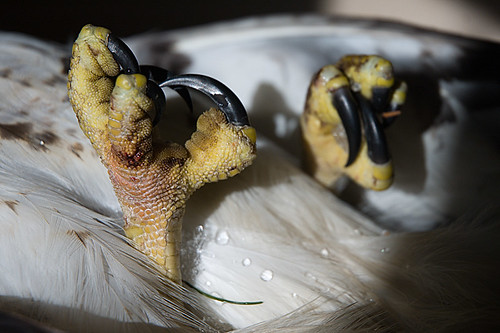
Obviously when a Red-tailed Hawk captures that squirrel the hawk needs to kill its prey as quickly as possible. If they fail to do so, the squirrel could bite the hawks toes and try to force it to let it go. This picture above shows a dead Red-tailed Hawk that was recently brought into the office. After closely inspecting it, we realized that it had numerous bite marks on its feet. Although this bird probably passed away from a vehicle strike, there was always a chance that it could have gotten an infection in its toes and then increased it chances of dieing from starvation (for not being able to use its feet properly).
Nuthatch Fun Today
This White-breasted Nuthatch was teasing me all day with opening seeds in my window feeder. I happen to pull out my point-and-shoot camera and captured this mini video clip. It would take the seed, place it in the crack and chip away at the shell to open the seed. Yes – my windows are dirty.
I am extremely happy that blip.tv has finally worked out the code for adding video clips to wordpress blogs!!! Expect many more fun video clips from me here in the near future!
BIRD BANDING NEWS FOR THE DAY

Today I recaptured a male Red-breasted Nuthatch who I had first banded on the 5th of October 2005 (I have caught this guy a few times now). I have 5 or 6 Red-breasted Nuthatch who have been banded around the office but I seriously think this little guy probably visits my window feeder more than any other of those nuthatches. I always love watching him climb up and down the window frame.


 Mon@rch's Nature Blog